
Seeking help is a brave and intelligent step. When we feel overwhelmed, it’s easy to believe that we’re broken or that our struggles are permanent. Cognitive Behavioral Therapy (CBT) offers a practical, evidence-based approach to prove that neither of those things is true.
What is CBT?
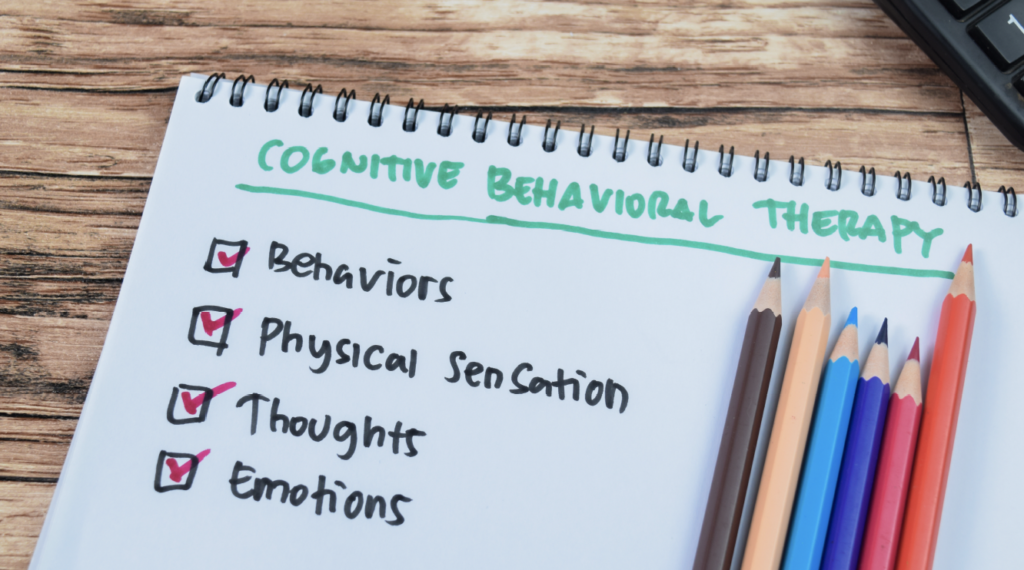
Cognitive Behavioral Therapy is a structured, short-term form of psychotherapy that helps people understand how their thoughts, feelings, and behaviors are deeply connected. Developed by Dr. Aaron Beck, it has become one of the most researched and trusted therapies in the world.
While CBT acknowledges the importance of early life experiences — and does explore and challenge the deeply held beliefs that may have formed in childhood — it focuses primarily on the present. Rather than revisiting the past for its own sake, CBT helps you understand how those intrinsic beliefs may be shaping your experience today, and gives you practical tools to shift unhelpful patterns in real-time.
“CBT helps you understand how your thoughts, emotions, and behaviours shape the way you experience life. By challenging unhelpful patterns and deeply rooted beliefs.”
What Can You Expect in a CBT Session?
A typical session is highly collaborative. You and your therapist are a team, and you are always in the driver’s seat. Here is how it generally flows:
- Connecting and Checking In: You’ll start by discussing your current mood and reviewing any goals or “homework” from the previous session.
- Working Through Challenges: You’ll tackle a specific issue using CBT techniques. This might involve looking at a “thought record” to identify cognitive distortions — those sneaky, irrational thought patterns that fuel anxiety or sadness.
- Setting Practical Goals: Before you leave, you and your therapist will agree on small, manageable steps to practice during the week. This bridges the gap between the therapy room and your real life.
How CBT Helps With Trauma, Depression, and Anxiety
Trauma and PTSD
Living with trauma or PTSD can leave you feeling constantly unsafe, emotionally overwhelmed, disconnected, or trapped in painful memories and fear. CBT helps you understand how trauma affects your thoughts, emotions, behaviours, and nervous system, while giving you practical tools to regain a sense of control and safety.
Through therapy, you begin challenging the fear, shame, hopelessness, and self-blame that trauma often creates. Instead of remaining stuck in survival mode, CBT helps you rebuild trust in yourself, process difficult experiences safely, and develop healthier ways of coping, thinking, and relating to the world around you.
Healing does not mean forgetting what happened — it means no longer allowing it to control your life.
Depression
For depression, CBT breaks the heavy cycles of withdrawal and negative self-talk, encouraging you to re-engage with life in small, achievable ways — gently dismantling the belief that things will never improve, and rebuilding a sense of agency and hope, one step at a time.
Anxiety
For anxiety, CBT helps you gradually face your fears rather than avoid them — because avoidance, while temporarily relieving, tends to make anxiety stronger over time. You learn to challenge catastrophic thinking, tolerate uncertainty, and approach situations that once felt overwhelming with growing confidence and calm.
Taking the first step isn’t always easy, but asking for help is a profound sign of strength. You don’t have to figure it all out alone.
If you’re curious whether CBT might be right for you, we’d love to have a conversation. No pressure, just connection.